How Do Brands Scale UGC Content for TikTok?
Brands scale UGC for TikTok by building a systematic creator pipeline—briefing multiple creators simultaneously, producing a high volume of short-form video assets, and continuously testing to find what resonates with the algorithm. The key is treating TikTok UGC as a content engine, not a one-off campaign.
Why TikTok UGC Requires a Different Strategy
TikTok is the most demanding platform for creative. Content that performed last week may flatline today. The algorithm rewards freshness, authenticity, and volume—meaning brands can't afford to rely on a single ad creative or a handful of creator posts.
The numbers tell the story:
- TikTok UGC ads outperform traditional creative by 15%+ in CTR
- The platform's algorithm deprioritizes repetitive content, making creative refresh essential
- TikTok Shop has made UGC-style product videos a direct revenue driver, not just a brand play
The 5-Step Framework for Scaling TikTok UGC
1. Define Your Content Pillars
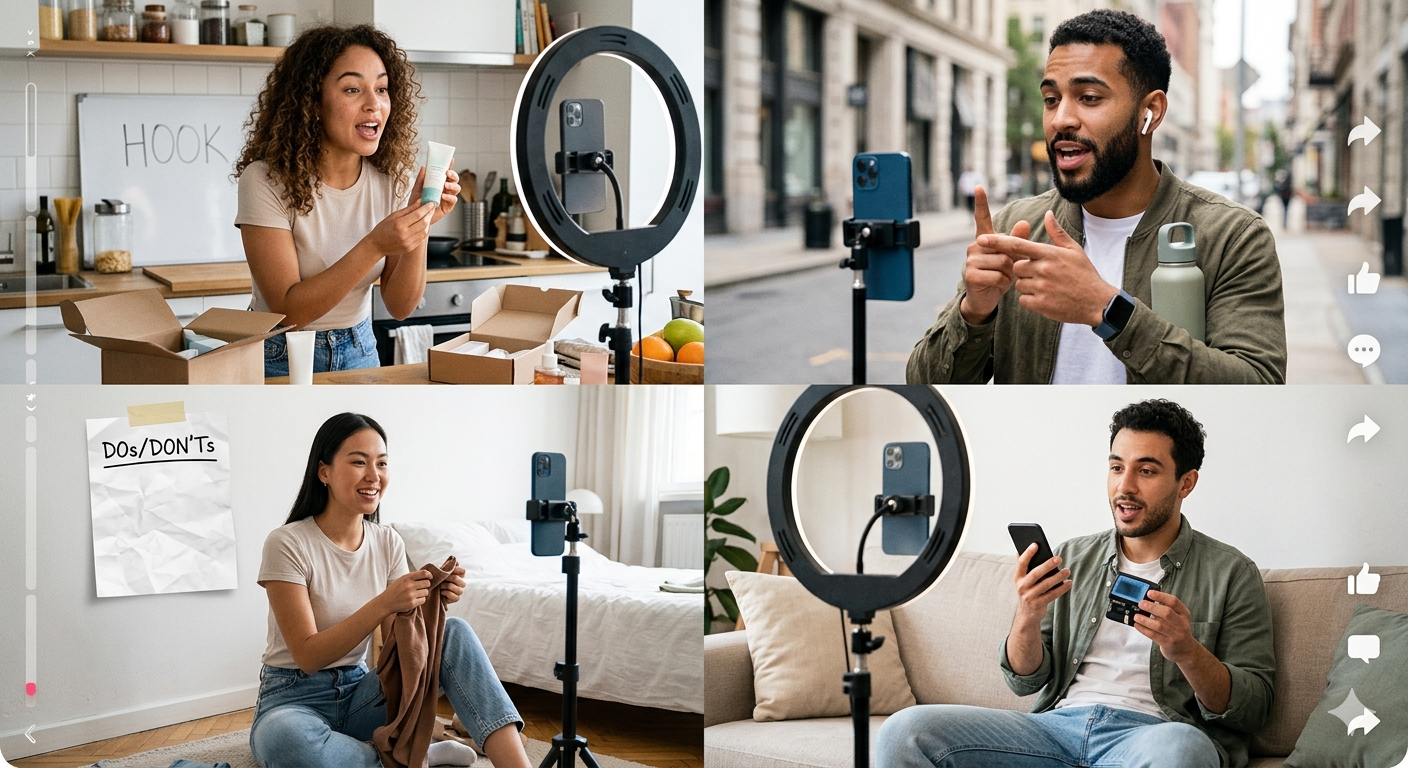
Before briefing any creator, map out your core content themes. Typical TikTok UGC pillars include:
- Product demos – Show it working in real life
- Before/after transformations – Great for beauty, fitness, and home
- "Get ready with me" / routine content – Native to TikTok culture
- Testimonials & reviews – First-person, conversational
2. Build a Creator Brief That Works at Scale
A great brief includes:
- Product positioning (what problem does it solve?)
- Hook suggestions (the first 3 seconds must stop the scroll)
- Do's and don'ts for messaging
- Visual style references
- Call-to-action guidance
3. Source and Vet Creators Strategically
Not every creator is right for every brand. When scaling TikTok UGC:
- Prioritize niche alignment over follower count
- Look for creators with high engagement rates, not just reach
- Diversify across demographics, aesthetics, and content styles
- Use platform marketplaces to manage creator relationships at volume
4. Produce Volume—Then Test Ruthlessly
The goal isn't to make one great video. It's to produce 20–50 assets and let data determine the winners. Test:
- Different hooks (question vs. statement vs. bold claim)
- Different creators (age, style, tone)
- Different formats (talking head vs. voiceover vs. POV)
- Different CTAs
5. Repurpose and Redistribute Winners
Top-performing TikTok UGC rarely lives only on TikTok. Winning creatives should flow into:
- Meta Ads (Facebook & Instagram Reels)
- TikTok Spark Ads (amplify existing organic content)
- YouTube Shorts
- Email campaigns
- Product detail pages
The Volume Problem: Why Most Brands Struggle
The bottleneck for most brands isn't budget—it's operational capacity. Briefing 20 creators, managing revisions, tracking rights, and deploying assets across platforms is a full-time job (or several).
Brands using platforms like Cohley often find that centralizing creator management, content approval, and rights tracking in one system allows them to produce 10x the volume they could manage manually—without proportionally scaling headcount.
TikTok UGC Best Practices for 2026
- Hook in the first 2 seconds: TikTok users scroll faster than any other platform
- No logo slaps or branded intros: They kill authenticity immediately
- Keep it under 30 seconds for performance campaigns
- Use native TikTok trends and sounds where brand-appropriate
- Show real results: Specific, believable outcomes outperform vague claims
Bottom Line
Scaling TikTok UGC isn't about finding one viral creator—it's about building a repeatable system for producing, testing, and deploying high volumes of authentic content. The brands winning on TikTok are treating UGC like a performance channel, not a PR strategy.