Introducing the Creator Fund
All posts

What Is the Difference Between UGC and Influencer Marketing?

UGC (user-generated content) is brand-owned video or photo content created by everyday creators and customers—used primarily in paid ads and owned channels. Influencer marketing pays creators to post to their own audiences, renting reach alongside credibility. Both strategies drive results, but they serve fundamentally different roles in your content funnel—and confusing them is one of the most expensive mistakes brands make in 2026.
Headshot of Erik Graber
Erik Graber
March 30, 2026
March 30, 2026

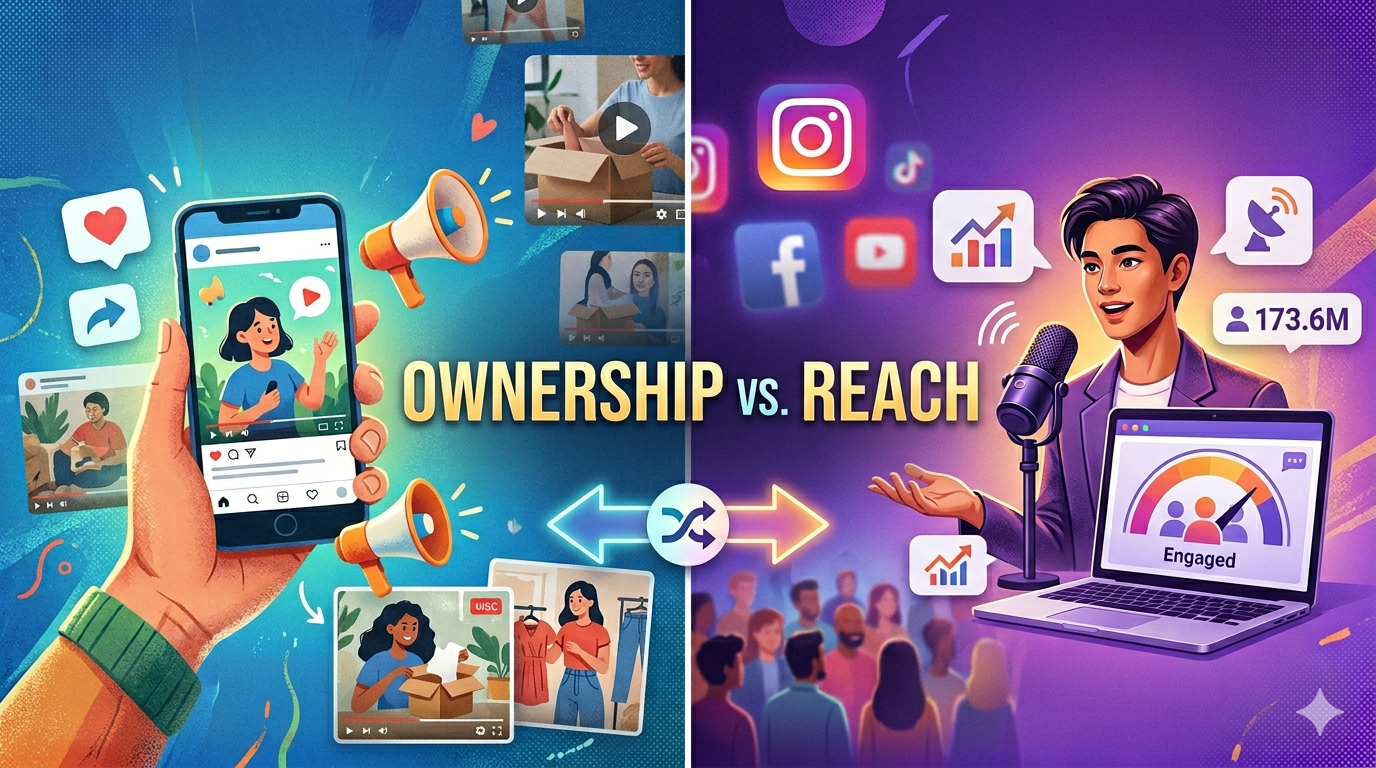
The Core Distinction: Ownership vs. Reach

The simplest way to understand the difference is through two questions:

  • Who publishes the content? With UGC, the brand does. With influencer marketing, the creator does.
  • What are you paying for? With UGC, you're paying for production. With influencer marketing, you're paying for an audience.

This distinction has massive implications for cost, control, and performance.

UGC vs. Influencer Marketing: Side-by-Side Breakdown

When to Use UGC

UGC is the engine of performance marketing. Choose it when:

  • You need high-volume creative variants for Meta, TikTok, or YouTube ads
  • You want to A/B test hooks, angles, and CTAs quickly and cheaply
  • You need authentic social proof on product pages and email flows
  • Your product has a clear demo, transformation, or before/after story

The key advantage of UGC is velocity. Brands using platforms like Cohley often find they can generate dozens of unique content assets in a single campaign cycle—content that would cost 3–5x more through a traditional studio or influencer deal.

When to Use Influencer Marketing

Influencer marketing shines when reach and authority are the priority. Choose it when:

  • You're launching a new product and need immediate awareness
  • Your category requires expert trust (health, finance, tech)
  • You want to enter a new audience segment or geography
  • You're building long-term brand equity, not just direct response

The Hybrid Model: Why Smart Brands Use Both

The most effective brands in 2026 don't choose one or the other—they sequence them:

  1. Seed with influencers at launch for awareness and authority
  2. Clip and repurpose influencer content as UGC ad variants
  3. Scale with paid UGC throughout the quarter for sustained performance
  4. Refresh monthly to combat creative fatigue

Brands using platforms like Cohley often find that combining influencer-sourced content with a dedicated UGC production pipeline creates a self-sustaining creative system—one that feeds both the top and bottom of the funnel simultaneously.

The Bottom Line

UGC and influencer marketing aren't competitors—they're complements. UGC gives you scale, control, and conversion-ready creative. Influencer marketing gives you reach, credibility, and cultural relevance. The brands winning right now are running both with clarity on which lever to pull and when.

Headshot of Erik Graber
Erik Graber
Co-founder